I tried to catch some lightning bolts
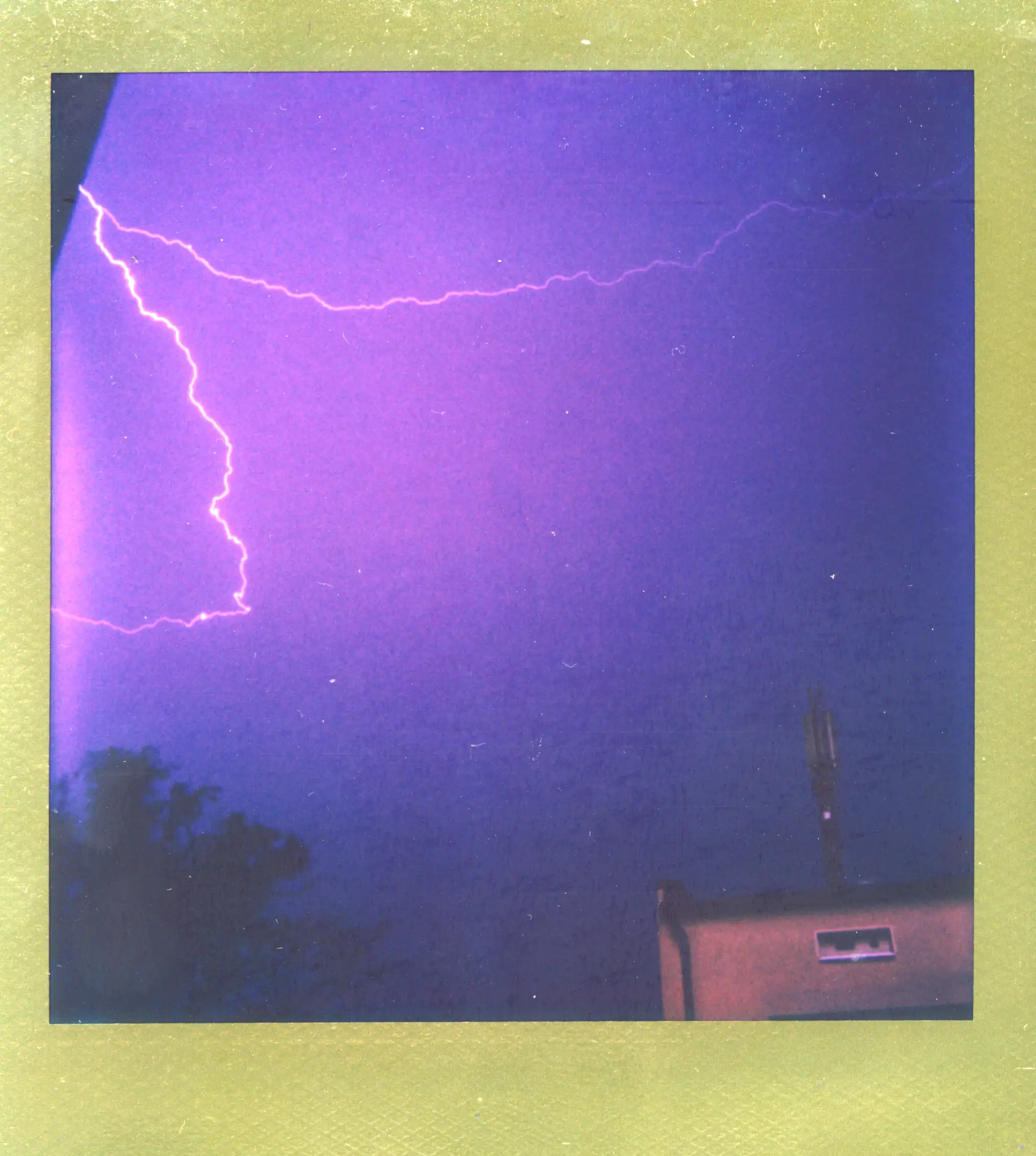
With the recent storms, I tried to catch a lightning bolt on film - something I’ve always wanted to attempt. There was no real plan or guide behind it, just a lot of trial and error to get a feel for what works with a Polaroid and what doesn’t (and to be fair, I don’t plan on becoming a full-time Polaroid storm chaser). It’s a bit of a dance with exposure settings and timing, thanks to the unpredictability of both the storm and the camera.
For me, the hardest part was figuring out how much exposure the lightning flash would actually produce, and when I’d end up with an overexposed shot versus a blank Polaroid. Sometimes I thought I’d overexposed, but the photo was just blank; other times, it was the opposite. The best results in this quick experiment seemed to come from using my usual nighttime long exposure settings. Clearly, more experimentation is needed.
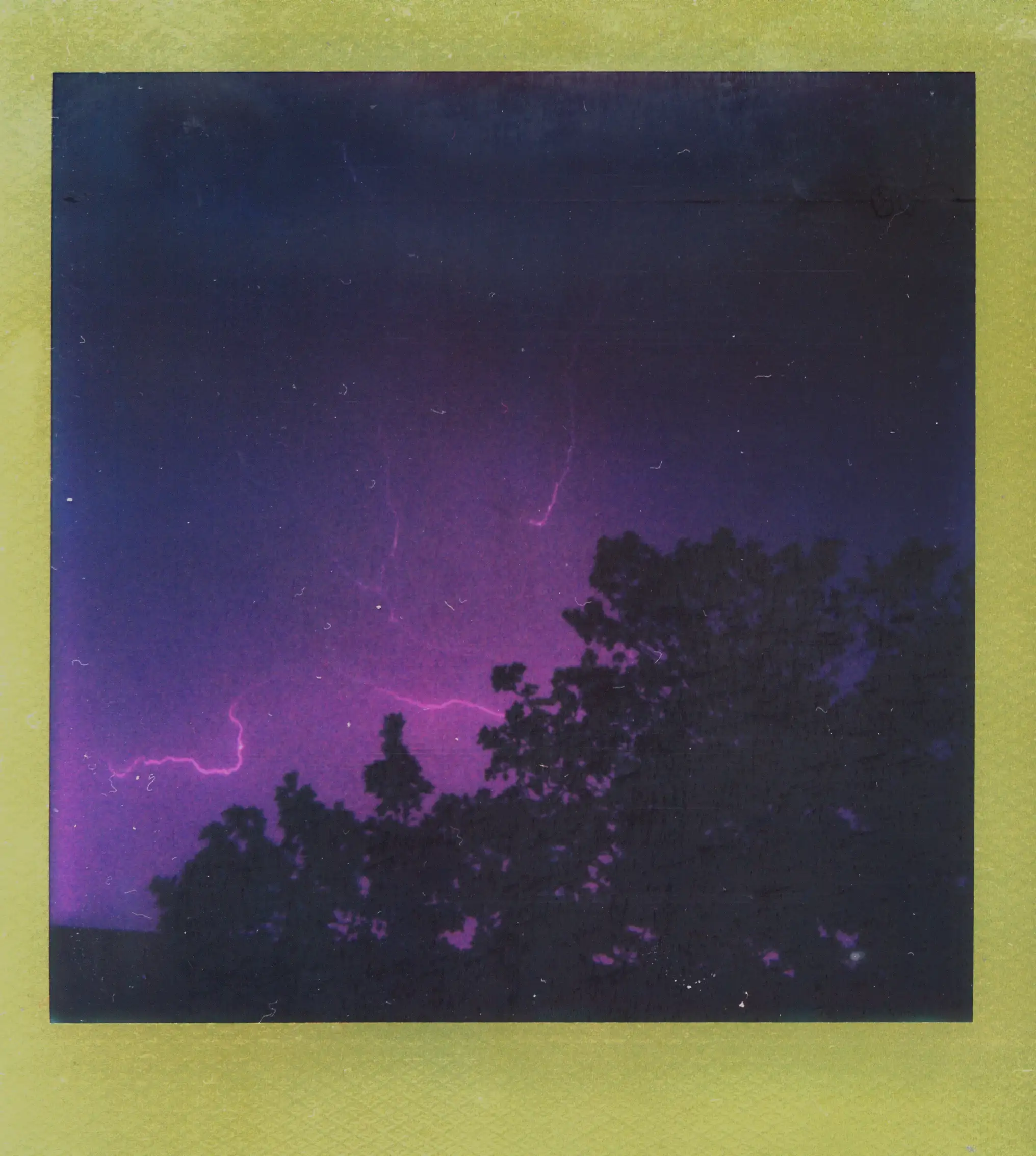
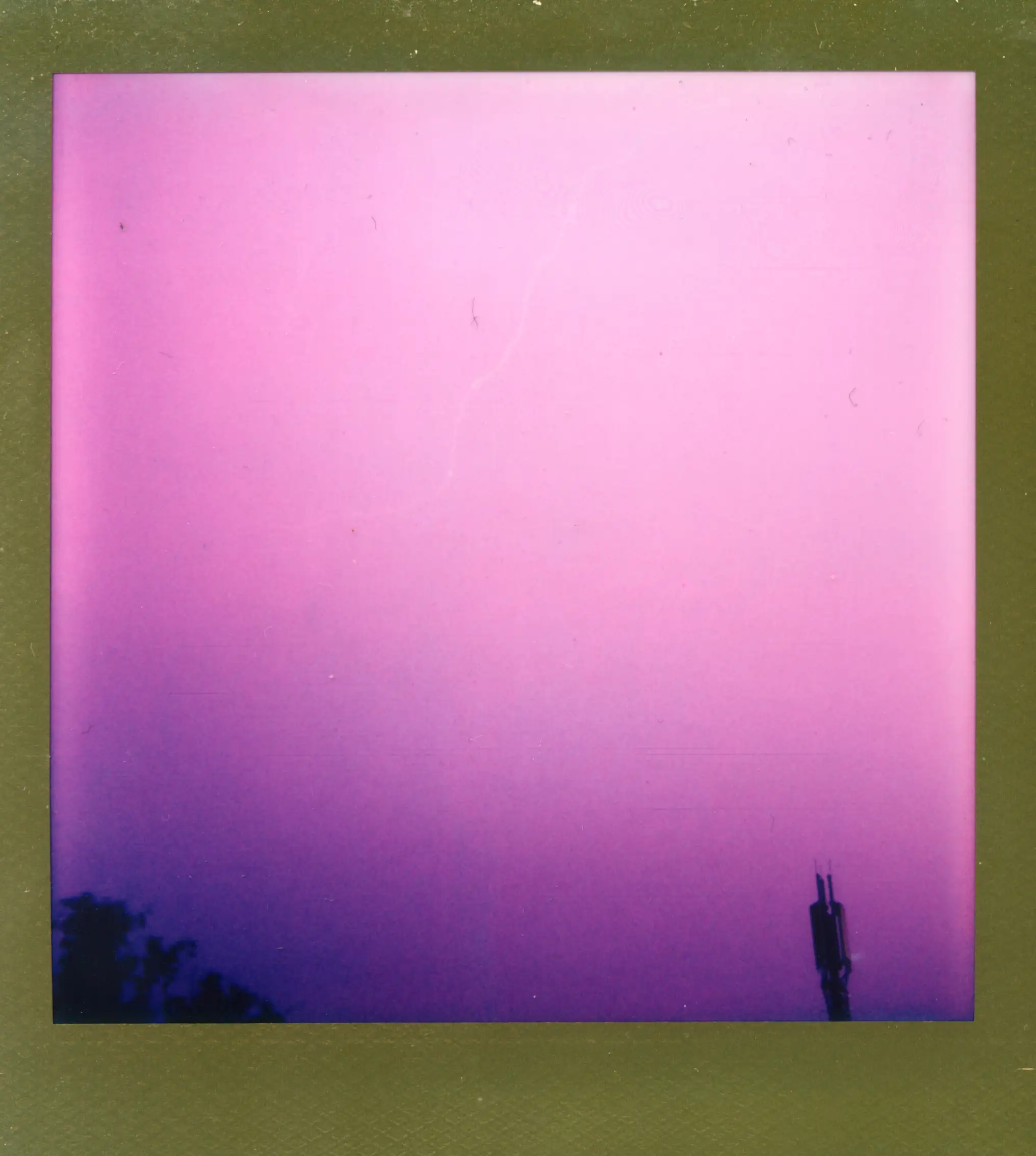
The small test got me intrigued, so I looked up some tips from storm chasers. Maybe there will be a chance to try these with my other film cameras.
Equipment:
-
Lenses:
- Wideangle lenses with f/2.0 (or less) to catch the storm cell in its entirety
- Tele (200mm) for lightning bolts
-
Filter:
- Graduated grey filter to minimze contrast issues like a bright sky or bright clouds illuminated from the sun and a dark foreground. Seems to be mostly an issue with wide angle lenses
- Polarization filter when the sun illuminates the clouds to give it more contrast
- not necessary for lightning bolts though because of the potential light reflections between filter an lens during the lightning flash
-
Tripod is a must
-
Save the equipment from the rain
Depending on the motive, time and light conditions you have different approaches:
Daylight:
- Take longer exposure times into considersations due to the darker spots in the storm clouds
- Lower ISO seems to be better
- Exposure time of 1/10s max otherwise the cloud structures start to blur
- Graduated grey filter for panorama shots
Night:
- distance between camera and the bolt is more relevant: the nearer the bolt, less light vanishes through the haze (the natural atmosspheric one and/or the light pollution), the brighter the bolt. Lightning bolts far away need more exposure time and/or open apeture. That is the difficulty with these kind of photography. A more open aperture could also affect the amount of light pollution that is captured which means less contrast or a overexposed picture. Especially a sudden near bright lightning flash could overexpose the picture as well. The haze also varies with the weather and therefore there is no clear rule to follow.
Sheet lightning:
- difficult to capture but similar to lightning bolts. The farer away it is, the harder it gets and maybe more ISO is needed to not overexpose
- exposure time should be short. The chance is lower to catch sheet lightning that way but the contrast is better
- best situation seems to be dusk or dawn so that low ISO and longtime exposure is possible due to the balanced light
Even though I didn’t get the perfect lightning shot this time, the process was a lot of fun and gave me a new appreciation for storm photographers. There’s something exciting about chasing that split-second flash, even if it means a lot of blank Polaroids along the way. I’m looking forward to the next storm - and the next experiment. Maybe with a bit more planning (and a faster lens), I’ll finally catch that elusive bolt.